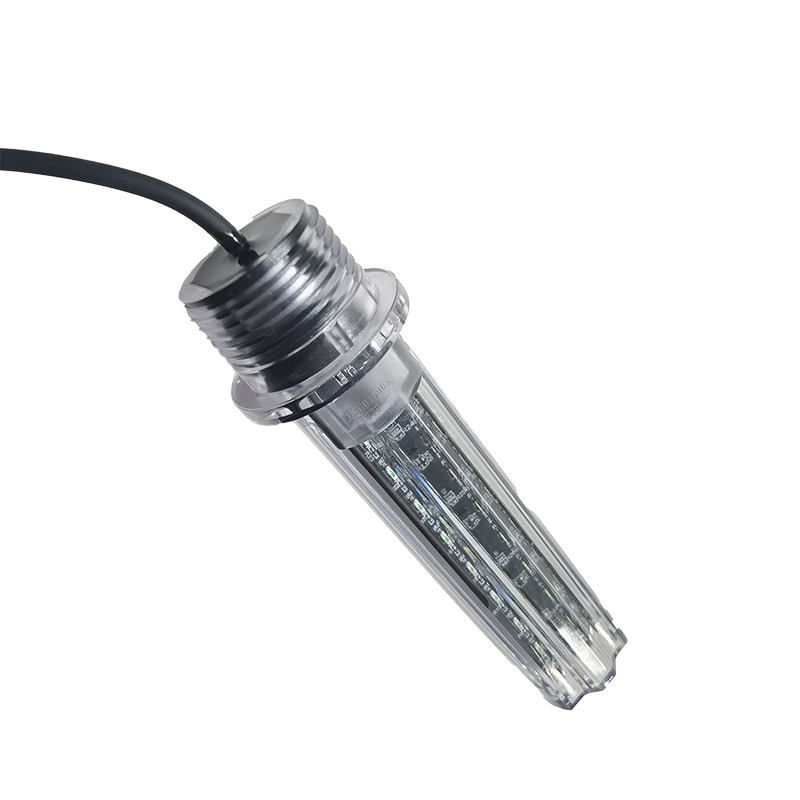
8点光学液位传感器LLM26PP05 热水器 鱼缸
- 品牌:
- 型号:


产品介绍
原理与优势/ Principle and Advantages
1. 光学式液体传感器的原理/ The principle of optical liquid sensors
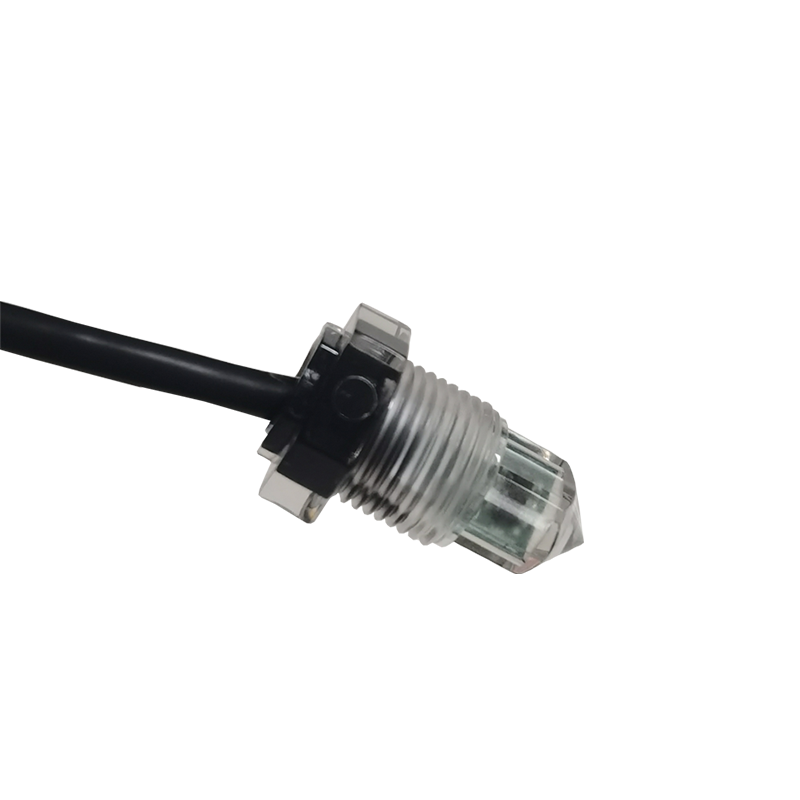
传感器利用光电效应和光的棱镜的折射效应进行检测容器内是否有液体的存在,当容器内有液体时,传感器的红外发光源发出的光照射到棱镜上,由于棱镜的折射率和液体相似,不会或有少量的红外光被反射回来。当容器内没有液体,传感器的红外发光源发出的光照射到棱镜上,会进行反射光电二极管接收到红外光后,阻值发生改变,从而使电路中的电压随发生改变。
The sensor usesthe photoelectric effect and the refraction effect of the prism of light to detect whether there isliquid in the container, when there isliquid in the container, the light emitted by the infrared lightsource of the sensor irradiatesthe prism, because the refractive index of the prism issimilar to that of the liquid, there will be no or a small amount of infrared light reflected back. When there is no liquid in the container, the light emitted by the sensor'sinfrared lightsource hitsthe prism, and the photodiode receivesthe infrared light, and the resistance value changes,so that the voltage in the circuit changes
2. 优势 / Advantages
集成8点检测,接线简单
Integrated 8-point detection, simple wiring
M26的螺纹可随意更换
The threads of the M26 can be changed at will
光学方式检测精确可靠
Optical detection is accurate and reliable
使用寿命长
Long service life
应用邻域 / Application
1. 水塔水位监测 / Water tower water level monitoring
2. 液位控制设备 / Liquid level control equipment
3. 漏液保护设备 /Leakage protection equipment
4. 缺液保护设备 / Lack of liquid protection equipment
5. 带水箱的产品 / Products with water tank
6. 热水器/ Water heater
热水器中没有液体,则做停止加热处理
If there is no liquid in the water heater, do stop heating treatment
7. 水族设备 / Aquarium equipment
可配合远程设备或者其他设备,实时监测鱼缸里面的液位是否正常,例如在低水位监测点安装传感器,若水位到达此点则提示,或在高液位监测点,水位超过则提示,以确保鱼缸水位不会过低过高。
It can work with remote devices or other devices to monitor whether the water level in the aquarium is normal in real time. For example, a sensor is installed at the low water level monitoring point to prompt if the water level reaches this point, or at the high water level monitoring point to prompt if the water level exceeds this point, so as to ensure that the water level of the aquarium is not too low or too high.